Custom Web App Development in 2026: Cost, Process, and What It Actually Delivers
30 April, 2026Last Updated
14 minutesRead
446Views
Most businesses shopping for a custom web app go through the same uncomfortable moment: they get a quote that is three times what they expected, from a vendor who cannot clearly explain what they are building or why it costs that much.
This guide fixes that. It covers what custom web app development actually involves, what it costs in the US, UK, Europe, the Middle East, and Australia, how the process works from first conversation to launch, and what real companies built with custom apps before they became household names.
If you are trying to decide whether to build, what to budget, or who to trust with the project, read this first.
Table of Contents
What is Custom Web App Development?
A custom web app is software that runs in a browser and is built specifically for your business, rather than configured from someone else’s template. It has its own database, its own logic, and its own user experience.
The practical difference from a regular website: a website shows information. A web app does things. It takes orders, manages accounts, processes payments, generates reports, coordinates teams, or runs whatever specific workflow your business actually needs.
According to IBM, roughly 79% of web applications require user authentication, compared to fewer than 18% of traditional websites. That gap is where custom apps live.
Three things define what makes it “custom”:
Built for you. Every screen, workflow, and data model reflects your specific business process, not a generic mould designed for the average company in your category.
Runs in a browser. No installation required. Users access it from any device with an internet connection, on any operating system.
Does something. It handles logic, stores and retrieves data, connects to external systems, and produces outcomes that matter to your business rather than just displaying information.
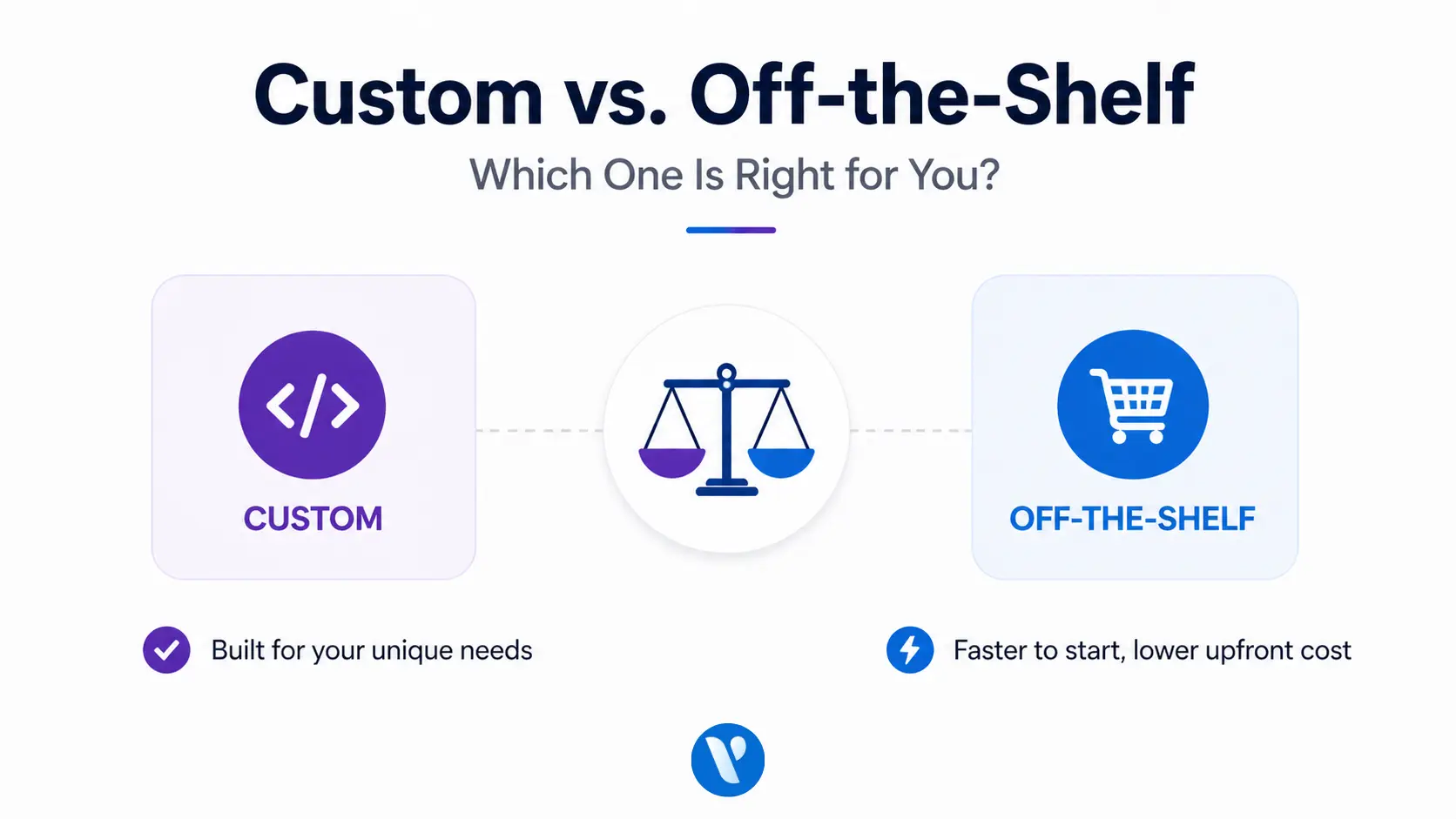
Custom vs. Off-the-Shelf: Which One Is Right for You?
Off-the-shelf SaaS tools are faster to start and cheaper upfront. They are also built for the average business in your category, which means they fit nobody perfectly.
Gartner research found that custom-built software delivers a 55% five-year ROI compared to 42% for packaged SaaS products. The difference comes from three places: no recurring licensing fees, fewer operational workarounds, and cleaner integration with internal systems.
Choose custom development when:
Your workflow is genuinely different from competitors and that difference is a business advantage
You need tight integration with internal systems, such as ERPs, CRMs, or proprietary databases
You are building a product to sell or license to customers
You have outgrown your current tools and workarounds are costing real time and money
You operate in a regulated industry where HIPAA, GDPR, PCI-DSS, UAE PDPL, or Australia’s Privacy Act shapes how data is handled
Choose off-the-shelf when:
You are validating an idea before committing to a build budget
Your needs are standard and a SaaS tool gets you 90% of the way there
Speed to market matters more than customization right now
Types of Custom Web Apps
Knowing the type you need shapes your timeline, budget, and technical approach.
Single Page Applications (SPAs) load once and update content without full page reloads. Gmail, Google Maps, and Figma are all SPAs. They feel fast and fluid. Development cost typically runs $5,000 to $12,000 depending on complexity.
Multi-Page Applications (MPAs) follow a traditional server-rendered page structure. Better for SEO-heavy products and large content libraries. Budget range: $5,000 to $20,000 and up.
Progressive Web Apps (PWAs) work offline, support push notifications, and load fast on any device or connection quality. According to Forbes, PWAs increase conversion rates by up to 52%. They work especially well for businesses with mobile-heavy users in markets with inconsistent internet access.
SaaS Platforms are web apps built to be sold as a subscription product. Multi-tenant architecture, billing, user management, and role-based permissions are standard requirements. Production-ready SaaS builds typically cost $10,000 to $30,000.
Internal Business Tools cover dashboards, admin panels, ops platforms, and custom CRMs. Often faster to scope and lower cost than consumer-facing products, but still require solid architecture to scale as the team grows.
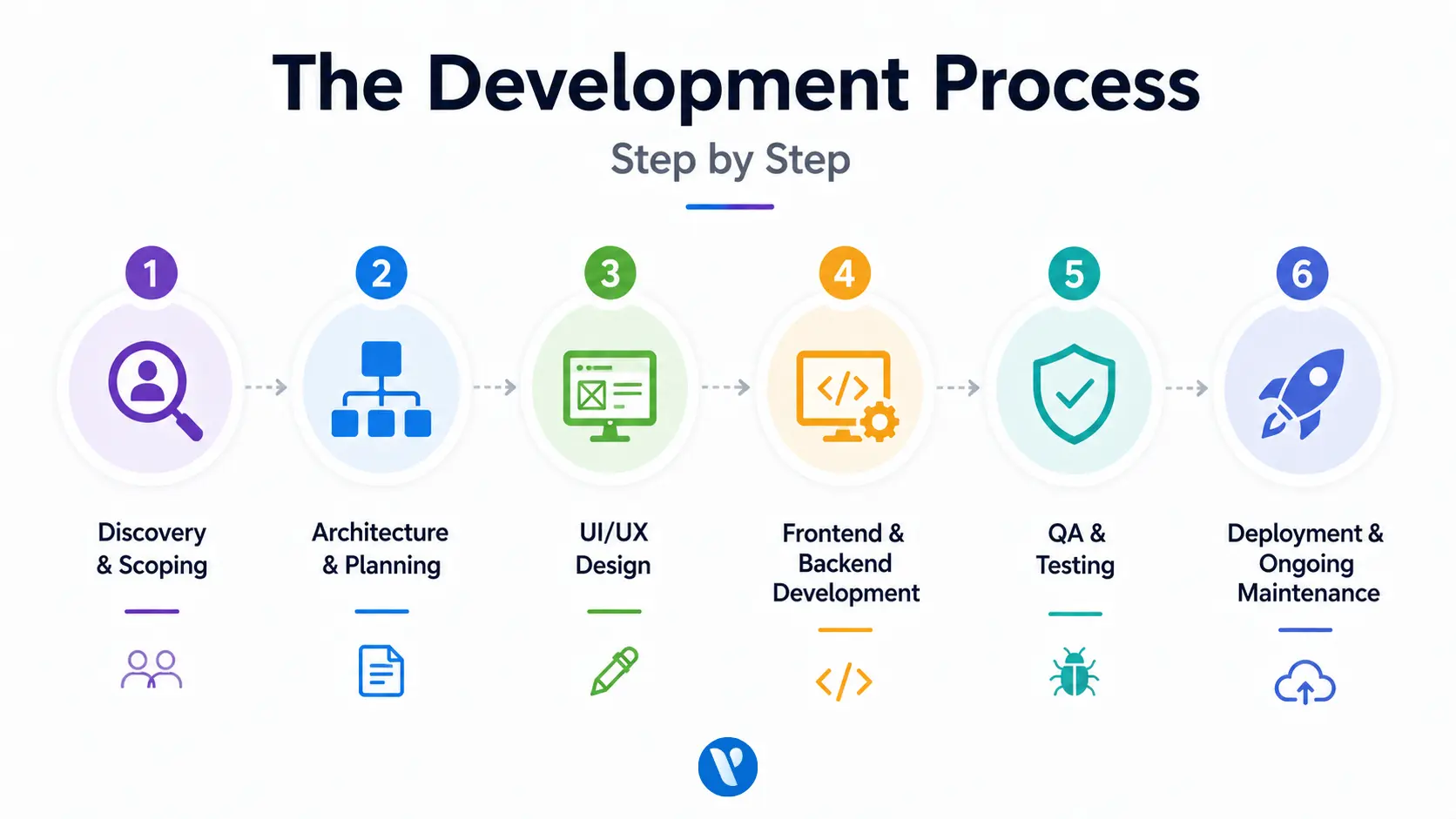
The Development Process, Step by Step
Every custom web app project follows the same sequence. The quality of each step determines whether the final product actually works.
1. Discovery and Scoping
This is where requirements get gathered, users get defined, and scope gets nailed down before any design or code work starts. Good agencies run structured workshops. Bad ones skip it and start writing code immediately, which is where scope creep and budget overruns come from.
A proper discovery phase takes one to three weeks. Skipping it is the single most common cause of blown budgets in custom software projects.
2. Architecture and Planning
The team selects the tech stack, designs the database structure, maps third-party integrations, and defines the hosting approach. They also document the project timeline, sprint structure, and delivery milestones. Compliance requirements like GDPR, HIPAA, or PCI-DSS get factored into the technical plan here, rather than treated as an afterthought at the end.
3. UI/UX Design
Designers build wireframes and prototypes before writing any code. The goal is to find and fix usability problems on paper, where changes cost almost nothing. Design typically accounts for 15% to 50% of total project cost depending on the number of screens, interaction complexity, and custom branding requirements.
4. Frontend and Backend Development
Frontend developers build what users see and interact with. Backend developers build the server logic, database, and APIs that power it. Both teams work in parallel across two-week sprints, delivering working features incrementally so stakeholders can review real progress rather than waiting months for a single large demo.
5. QA and Testing
Quality assurance engineers run functional, performance, security, and usability tests before launch. For regulated industries, compliance testing adds time and cost at this stage. Cutting the QA phase is how bugs end up in production and data breaches happen.
6. Deployment and Ongoing Maintenance
After testing clears, the app goes live on configured servers. Post-launch, the app needs regular updates, security patches, and performance tuning as usage grows. Plan for 15% to 20% of the original build cost per year in maintenance, and closer to 25% to 50% in year one as real user behavior surfaces things that testing did not catch.
How Much Does Custom Web App Development Cost?
There is no single number, but the ranges below reflect what companies across the US, UK, Europe, the Middle East, and Australia actually pay.
By project type
Project type
Scope
Cost (USD)
Timeline
MVP / Prototype
Single core feature, basic UI, minimal integrations
Multi-tenant SaaS, regulated industries, AI features
$20,000 – $50,000+
9-18 months
According to the Clutch 2024 Web App Development Pricing Guide, businesses investing in custom web apps see a 3x to 5x ROI, generated through subscriptions, transaction fees, and process automation.
By developer location
Where your team is based affects the total project cost more than any other single factor.
Region
Hourly rate (USD)
United States
$100 – $200/hr
United Kingdom
$80 – $140/hr
Australia
$90 – $140/hr
UAE / Dubai
$55 – $150/hr
Eastern Europe
$40 – $80/hr
India
$10 – $50/hr
Offshore and nearshore teams typically deliver 40% to 60% cost savings compared to onshore Western teams when you compare total project cost rather than hourly rates. That gap narrows when you factor in project management overhead, communication time, and rework. The right offshore partner matters more than the cheapest hourly rate.
Hidden costs that catch buyers off guard
Security audits and compliance: 10% to 15% of the project budget
Cloud hosting: $200 to $2,000+ per month depending on traffic volume
Third-party API integrations: $500 to $5,000 each
Annual maintenance: 15% to 20% of the original build cost
AI or machine learning features: 30% to 50% premium over standard development
HIPAA compliance: 25% to 40% uplift on the base build
GDPR compliance for EU products: roughly 10% to 15% additional for audits and data architecture
MVP first or full build?
Building the complete product before validating with real users is the most expensive mistake in custom software. Startups that ship an MVP first reduce initial capital outlay by 30% to 40% and reach market 3 to 6 months faster. If users respond, you build on real feedback. If they do not, you have not spent $300,000 finding out.
What Three Well-Known Companies Built Before They Were Famous
These companies started with simple custom web apps before they became category-defining businesses. The early technical decisions in each case either enabled or constrained everything that followed.
Airbnb (United States)
Airbnb launched in 2008 as a basic web app that let people list a spare room. The founders built it themselves to answer one specific question: will strangers pay to stay in someone else’s home?
They got their answer, and the lean MVP they built became the foundation for a platform that generated $11.1 billion in revenue in 2024, processed 491 million bookings, and now operates across 220+ countries with 8.1 million active listings. Airbnb did not overbuild in the beginning. They validated the core idea as cheaply as possible, then invested in the infrastructure to scale it once they knew what they were scaling.
Canva (Australia)
Canva spent nearly two years on technical foundations before launching publicly in 2013. The team made one architectural decision early that looked like slow progress at the time: they built on HTML5 instead of Flash and invested in real-time collaboration infrastructure from the start.
By 2025, that decision was the reason Canva could support 260 million monthly active users and $3.5 billion in annualized revenue at a company valuation of roughly $42 billion. What seemed like an overly cautious foundation in 2013 turned out to be the ceiling of their long-term scale. Architecture decisions made early are very hard to undo later.
Slack (United States)
Slack was not built as a product. It was the internal messaging tool a small team used to coordinate across offices in San Francisco, New York, and Vancouver while building a game that eventually failed. When the game shut down in 2012, the tool was the only thing worth keeping.
They launched to beta in 2013 and had 8,000 signup requests on day one. Within 1.25 years it was valued at $1 billion, the fastest any SaaS company had reached that milestone at the time. Salesforce acquired Slack for $27.7 billion in 2021. Companies using the platform report 32% less email, 27% fewer meetings, and 23% faster time-to-market, per Slack’s published customer data.
The pattern across all three: start with a specific, narrow problem. Build something that actually solves it for real users. Do not try to build everything at once.
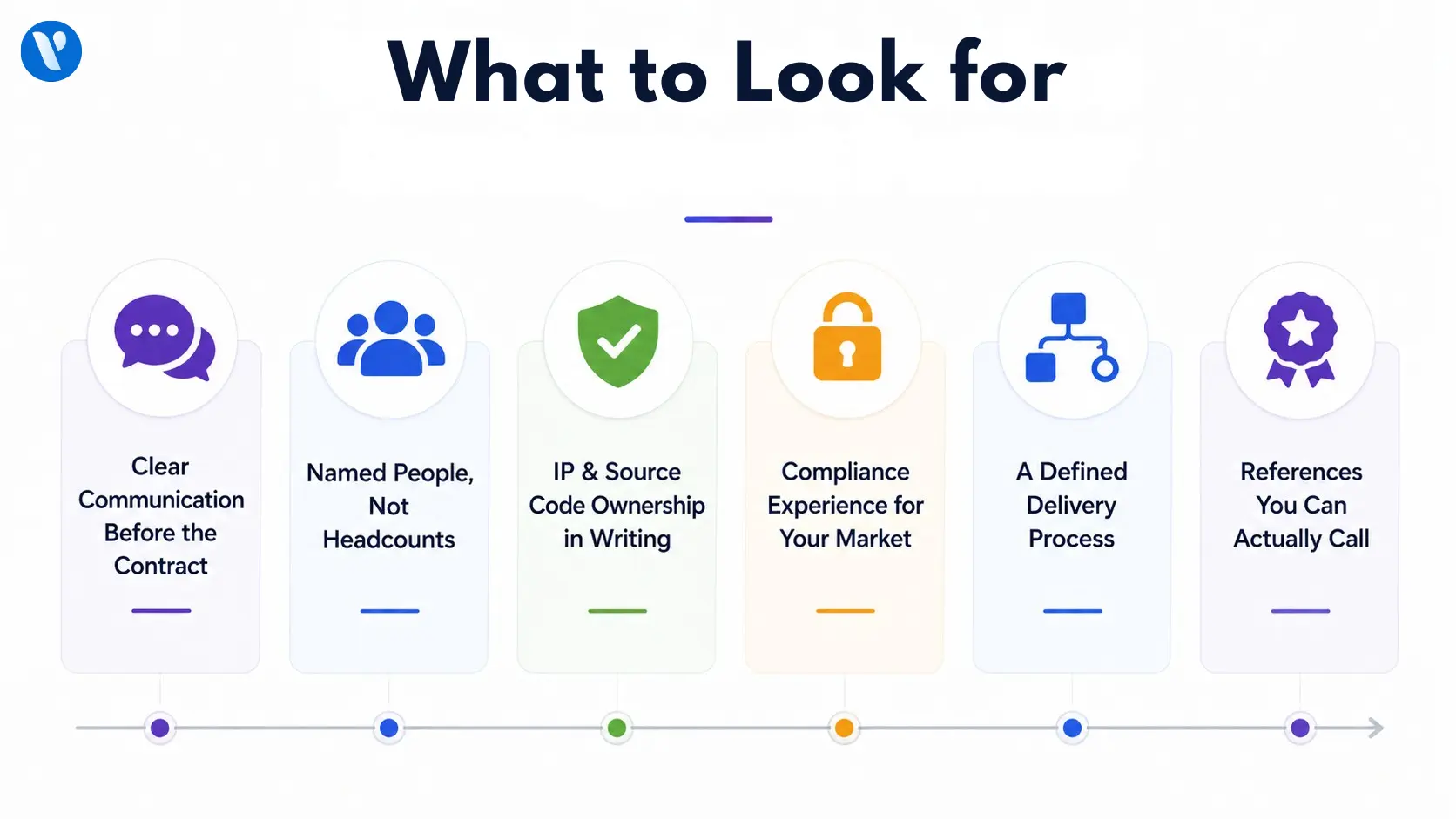
What to Look for in a Development Partner
Most painful web app projects happen because the buyer chose a vendor based on price or a polished pitch, and only discovered too late that the team could not deliver.
Western buyers consistently raise the same concerns when evaluating offshore and nearshore development partners. Here is what actually separates a good partner from a risky one.
Communication before the contract. Does the team ask hard questions about your requirements, or do they agree with everything in the sales call? Agencies that push back early and surface risks are product partners. Agencies that just say yes to everything are order-takers. You want the former.
Named people, not headcounts. Ask who will specifically work on your project: names, seniority, roles. A strong delivery lead who bridges business and technical thinking is worth more than a large team of junior developers. Also ask whether those same people will be on the project throughout, or whether senior talent gets swapped out after the deal closes.
IP and source code ownership in writing. Before signing anything, confirm that you will own all code, assets, and documentation outright at project completion. Do not accept vague licensing language. According to a 2025 Zipdo survey, 53% of companies cite data security and IP ownership as their top concern when working with offshore development teams.
Compliance experience that matches your market. If you operate in the EU, your vendor needs to understand GDPR at an architectural level, not just sign a Data Processing Agreement. If you handle health data in the US, they need genuine HIPAA experience. Compliance retrofits after launch are expensive, sometimes impossible, and occasionally create legal exposure.
A defined delivery process. Ask about sprint length, tooling (Jira, Linear, Confluence, GitHub), demo cadence, and how they handle scope changes mid-project. Vague answers here reliably predict vague execution later.
References you can actually call. Not a logo wall. Real past clients with reachable contacts who worked with the same team on similar projects. One good reference call tells you more than ten case studies.
Work With Yeasitech
Yeasitech builds custom web applications for startups and mid-market companies across the US, UK, Europe, the Middle East, and Australia.
We run structured discovery before writing a single line of code, deliver working software in two-week sprints, and hand over full IP and source code at project completion. Every engagement comes with a named delivery lead and documented architecture, so you are never dependent on us to understand your own product.
If you are scoping a project or working out what a build like yours should realistically cost, contact our team for a free consultation. No deck, no pressure. Just a direct conversation about what you need and whether we are the right fit to build it.
FAQs
How much does custom web app development cost in 2026?
Costs range from $15,000 for a focused MVP to $500,000+ for enterprise platforms with complex integrations and compliance requirements. The biggest variables are project complexity, team location, and feature scope. Offshore teams in India and Eastern Europe typically cost 40-60% less than US or UK teams for equivalent quality, per industry benchmarks from Clutch and GoodFirms.
How long does it take to build a custom web app?
Simple MVPs with a narrow feature set take 2 to 4 months. Mid-market apps with multiple user roles, integrations, and custom dashboards take 4 to 8 months. Enterprise platforms, regulated-industry apps, and products with AI or ML features typically take 9 to 18 months from discovery to production launch.
Should I start with an MVP or build the full product?
Start with an MVP. It reduces your upfront spend by 30% to 40%, gets real users faster, and gives you data to make better product decisions before the big investment. Airbnb, Canva, and Slack all validated narrow ideas cheaply before scaling. The full product is built on what you learn from the MVP, not assumptions made before you had any users.
How do I protect my IP when working with an offshore development team?
Get a signed NDA and a contract that explicitly assigns all source code, IP, and documentation to you at project completion. Avoid vague licensing language. Ask about the vendor’s compliance posture (ISO 27001, SOC 2), their internal access controls, and how they handle data for clients in your jurisdiction, whether that is GDPR, HIPAA, or PDPL.
What is the difference between a web app and off-the-shelf software?
Off-the-shelf software is built for the average business in your category and configured to fit. A custom web app is built around your specific process and workflow from the ground up. Custom costs more upfront but typically delivers better long-term ROI through eliminated licensing fees, fewer operational workarounds, and clean integration with your existing systems.
What does ongoing web app maintenance actually cost?
Plan for 15% to 20% of the original development cost per year at steady state. A $100,000 app costs roughly $15,000 to $20,000 per year to maintain. Year one is typically heavier, often 25% to 50% of the build cost, as real user traffic surfaces issues that testing did not catch. Also budget separately for hosting, security audits, and feature additions.
What questions should I ask a web app development company before hiring?
Ask who specifically will work on your project, whether you own all source code and IP outright, what the sprint and demo cadence looks like, how they handle scope changes, what compliance standards they meet, and whether you can speak directly to past clients on similar projects. How a team answers these questions tells you more than their portfolio does.