From concept to launch, we deliver exceptional websites
using a comprehensive,
user-centric approach. Our focus on intuitive design and
agile methodologies ensures
solutions that surpass expectations. We create
responsive, SEO-friendly websites that
captivate and engage visitors.
Our expert team leverages cutting-edge technologies to
develop high-performance apps for
iOS and Android. We prioritize user experience and
functionality, crafting mobile solutions
that captivate and retain users.
We design scalable, tailored cloud solutions to meet your
business needs, ensuring
efficiency and cost-effectiveness. Our cloud services
optimize your operations with secure,
reliable, and flexible infrastructure.
We build robust, scalable e-commerce solutions customized
to your brand. Our platforms
are designed to enhance user experience, boost sales,
and elevate your online presence
Our intelligent solutions provide valuable insights,
automate processes, and deliver
personalized user experiences. We harness the power of
data to drive innovation and
efficiency in your business.
We connect the physical and digital worlds by creating
IoT solutions that enhance
connectivity and streamline operations. Our developments
improve efficiency and offer
real-time data insights.
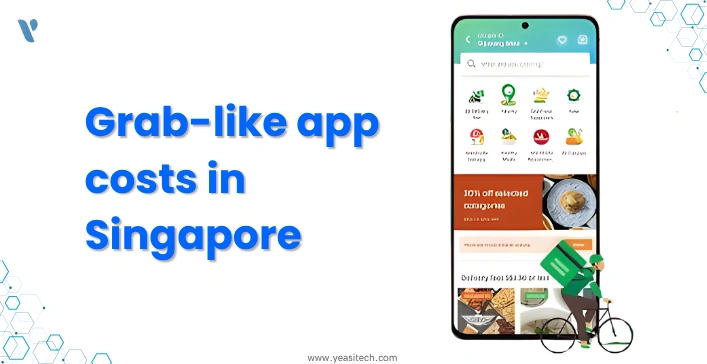
The Real Cost to Build an App like GRAB in Singapore in 2026
8 January, 2026Last Updated
12 minutesRead
892Views
Tired of Confusing Answers? Here’s What It Really Costs to develop an app like GRAB.
Let’s be real for a second.
You’ve been searching online for hours, trying to figure out how much it costs to build an app like GRAB, right? And what did you find? A bunch of websites say “it depends” or throw crazy numbers at you like “$10,000 to $500,000.” That’s not helpful at all!
Some websites even claim you can build a GRAB clone for super cheap. Spoiler alert: you can’t. Not if you want something that actually works and people will use.
Here’s what I’m going to do: I’ll explain everything in plain English,no tech jargon, no confusing terms. Just straightforward answers about what it costs, why it costs that much, and how you can build smart without wasting money.
Think of this as a friendly chat over coffee. Ready? Let’s jump in.
Table of Contents
Why Everyone in Singapore Wants to Build the “Next GRAB”
It’s 7 AM on a Monday. You open one app, book a ride to work, order breakfast to your office, pay for both with a tap, and earn loyalty points that you’ll use for lunch later. All without leaving the app.
That’s the magic of GRAB. And that’s why every entrepreneur, investor, and business owner in Singapore is asking: “Can we build something like this?”
Here’s why this makes sense in 2026:
Singapore’s digital economy is absolutely booming. We’re talking about a market that’s projected to hit SGD $2.3 billion this year. People here love convenience. We’re a society that invented efficiency as a national sport. If you can do five things in one app instead of juggling five different apps, you’ve basically invented the wheel. Singapore has:
Over 90% smartphone penetration (basically everyone and their grandma has a smartphone)
Lightning-fast internet everywhere
A population that trusts digital payments
A government that actively supports tech innovation
Fun fact: GRAB didn’t start as GRAB. Back in 2012, it was called MyTeksi, just a simple taxi booking app in Malaysia. The founders were Harvard Business School students who got frustrated trying to hail cabs in KL. Fast forward 13 years and $12 billion in funding later, and boom, Southeast Asia’s first decacorn (that’s a $10 billion+ valuation, in case you’re wondering).
So when you say you want to build an app like GRAB, you’re not just chasing a trend. You’re tapping into a proven model that works. You’re just not doing it with $12 billion, which is where smart planning comes in.
What Does “Building an App Like GRAB” Actually Mean?
Let me stop you right here before you think too small. When most people say they want an app like GRAB, they’re imagining the ride-hailing part. You know, tap a button, car shows up, you pay, done. That’s like looking at an iceberg and only seeing the tip.
Here’s what GRAB really is: It’s not one app. It’s a digital city. Think about it:
Ride-hailing (cars, bikes, taxis)
Food delivery (restaurants, groceries, even coffee)
Rewards program (points that actually mean something)
And behind the scenes? There are separate apps and dashboards for:
Drivers managing their earnings and trips
Restaurants processing orders
Delivery partners tracking routes
Customer support teams handling complaints
Business analytics teams crunching data
Each of these is essentially its own mini-platform, all connected through one ecosystem.
The Features Your GRAB-Style App Absolutely Needs in 2026
Alright, let’s talk about what users in Singapore actually expect when they download your app. Spoiler: the bar is high. Singaporeans are spoiled by world-class apps, and they’ll delete yours faster than you can say “minimum viable product” if it’s clunky.
1. Lightning-Fast Ride Booking
Users expect to book a ride in under 10 seconds. Seriously. Open app → see available cars → tap → done. No loading screens. No lag. No “please wait while we search.”
Behind the scenes, this requires some serious tech, matching algorithms that pair riders with the nearest drivers, GPS accuracy, real-time availability checks, and instant push notifications.
2. Live Tracking That Actually Works
Remember the old days when you’d book a cab and just… wait? And wonder? And wait some more?
Yeah, that’s dead. Users want to see their driver’s car moving on the map in real-time. Whether it’s a ride or a food delivery, live tracking is non-negotiable. This means integrating with mapping services (Google Maps, Mapbox), handling location updates smoothly, and making sure the battery doesn’t drain while doing it.
3. Payments That Feel Invisible
In 2026, nobody wants to fumble with credit cards or cash. Users expect:
Saved payment methods
PayNow integration (this is Singapore, after all)
Digital wallets
Maybe even Buy Now Pay Later options
And everything needs to be PCI DSS compliant (that’s the security standard for handling payments). Mess this up, and you’re not just losing users, you’re facing legal trouble.
4. Smart Notifications (Not Annoying Ones)
There’s a fine line between helpful notifications and spam. Users want updates about their order, promotional offers that actually matter, and maybe a reminder about unused rewards.
But send too many? They’ll turn off notifications or worse, uninstall. The secret is personalization and timing. “Your driver is 2 minutes away” = good. “10% off rides!” at 3 AM = bad.
5. Order History & Easy Receipts
This seems simple, but it’s crucial. People need to:
Track their spending
Re-order their favorite meals with one tap
Download receipts for expense claims
Dispute charges if something goes wrong
6. Rewards That Actually Reward
Here’s something GRAB nailed: GrabRewards. Users earn points for every transaction and can redeem them for discounts, free rides, or other perks. It’s gamification done right.
In 2026, loyalty programs aren’t optional; they’re a retention strategy. Users stick around because they’ve invested in your ecosystem.
7. Security That Doesn’t Feel Like a Hassle
Face ID, fingerprint login, two-factor authentication, users expect their data to be locked down tight, but they don’t want it to take 5 minutes to log in every time.
The trick is balancing security with convenience. Biometric login is perfect for this.
8. Works in Multiple Languages
Singapore is multilingual. Your app needs to support English, Mandarin, Malay, and Tamil at a minimum. Not just translated text, but culturally appropriate design and customer support.
Quick Reality Check:
You don’t need ALL of these features in Version 1.0. But you need to know which ones are dealbreakers for your target users.
At YeasiTech, we run feature prioritization workshops with clients. Basically, we map out every feature you want, then ruthlessly cut it down to what you need for launch. This saves you months and tons of money, because you’re building what matters first and validating with real users before adding the bells and whistles.
How GRAB Actually Makes Money?
Let’s talk money. Because ultimately, building an app like GRAB isn’t just about cool features, it’s about creating a sustainable, profitable business. GRAB’s genius lies in its multi-channel revenue model. Here’s how they monetize:
Commission-Based Revenue: GRAB takes a percentage cut from every transaction, whether it’s a ride fare, food delivery order, or merchant sale. Typical rates range from 15-30% depending on the service.
Delivery & Service Fees: Users pay small fees (SGD $1-5) for delivery, surge pricing during peak hours, or priority services. These micro-fees add up fast at scale.
Advertising & Promoted Listings: Restaurants and merchants pay for featured placements within the app. Think of it as Google Ads, but inside the GRAB ecosystem.
Subscription Models: GrabUnlimited offers users discounts in exchange for a monthly fee. This creates predictable recurring revenue and increases user stickiness.
Fintech Services: GrabPay, insurance products, micro-loans; GRAB has evolved into a financial services platform. Every payment processed generates transaction fees and data insights.
Startup Translation:
You don’t need to launch all these revenue streams at once. Start with commissions and service fees. As your user base grows, layer in advertising, then subscriptions, then fintech partnerships. The beauty of the super app model is that one user = multiple revenue touchpoints.
Example: A user who books a ride in the morning, orders lunch at noon, and pays for groceries in the evening generates revenue three times in one day, all within your ecosystem.
Real Cost Breakdown: How Much Does It Cost to Build an App Like GRAB in Singapore?
Okay, here comes the moment of truth. What does building an app like GRAB actually cost in Singapore in 2026? Short answer: Between SGD $300,000 to SGD $650,000 for a solid MVP that can compete. Longer answer: Let me break down where every dollar goes.
User research, wireframes, visual design, prototypes. This is what makes your app feel premium, not like a 2015 Android template.
iOS App Development
$12,000 – $20,000
Building the iPhone version. Native Swift code for smooth performance.
Android App Development
$10,000 – $20,000
Building the Android version. Native Kotlin for optimization.
Backend Development
$13,000 – $25,000
The brain of your operation servers, databases, APIs, and business logic. This is where the magic happens.
Payment Integration
$5,000 – $10,000
Connecting Stripe, PayNow, credit cards, and wallets. Plus, making sure everything is secure and compliant.
Admin Dashboard
$10,000 – $30,000
The control center for managing users, drivers, orders, analytics. Think of it as the cockpit.
Real-Time Tracking
$5,000 – $10,000
Google Maps integration, GPS optimization, route calculation.
Testing & QA
$10,000 – $20,000
Finding bugs before your users do. Testing on different devices, networks, scenarios.
Legal & Compliance
$5,000 – $15,000
PDPA compliance, privacy policies, terms of service. Singapore takes data protection seriously.
Project Management
$15,000 – $30,000
Someone to keep everyone on track, manage timelines, communicate progress.
Contingency Buffer
$10,000 – $50,000
Because stuff happens. Scope changes, unexpected issues, market pivots.
YeasiTech’s Approach: We combine Singapore-based project leadership and UX expertise with carefully vetted offshore engineering teams for backend and development work. This hybrid model delivers local market understanding at globally competitive rates, typically reducing costs by 25-35% without compromising quality.
GRAB App Development Timeline & Ideal Team Structure
Let’s set realistic expectations on timing.
Development Timeline:
MVP (Single Service): 4-6 months
Full Super App (Multi-Service): 12-18 months
Ongoing Optimization: Continuous
Lessons from GRAB’s Success Story Every Founder Should Know
GRAB’s journey from scrappy startup to $40 billion tech giant holds valuable lessons for anyone building an app like GRAB in 2026.
Lesson #1: Localization Wins Markets
GRAB didn’t just translate their app; they rebuilt it for Southeast Asian realities. Cash payments, motorbike taxis, language support, and localized customer service. They understood that what works in San Francisco doesn’t work in Singapore, Jakarta, or Manila.
Lesson #2: Trust Is Currency
In ride-hailing and delivery, trust is everything. GRAB invested heavily in driver verification, customer support, and transparent pricing. Build trust early, and users will forgive bugs. Lose trust, and no amount of marketing will save you.
Lesson #3: Data Is Your Competitive Moat
GRAB uses data to optimize routes, predict demand, personalize offers, and prevent fraud. The more transactions you process, the smarter your algorithms become. This creates a compounding advantage over time.
GRAB partnered with telcos, banks, governments, and merchants to expand rapidly. They didn’t try to build everything in-house. Your super app should be a platform that integrates with the ecosystem, not an island.
Lesson #5: Start Small, Scale Smart
GRAB’s first app was buggy. Their first drivers were taxi operators skeptical of technology. But they launched, learned, and iterated. Perfection is the enemy of progress.
Smart Cost Optimization Strategies for App Development in Singapore
Let’s get practical. How do you build an app like GRAB without burning through your entire funding round?
Strategy #1: Hybrid Development Models: Combine Singapore-based product management and UX with offshore engineering. This gives you local market expertise while controlling costs.
Strategy #2: Modular Architecture: Build your app in independent modules (ride-hailing, delivery, payments). This allows you to launch incrementally and scale specific features based on demand.
Strategy #3: Leverage Pre-Built SDKs: Don’t reinvent the wheel. YeasiTech offers pre-built modules for payments, notifications, and authentication that can reduce development time by 30-40%.
Strategy #4: Cloud-Native Infrastructure: Use AWS, Google Cloud, or Azure with auto-scaling. You only pay for resources you use, and you can scale up during peak times without over-provisioning.
Strategy #5: Agile Over Waterfall: Fixed-bid waterfall projects often lead to scope creep and cost overruns. Agile development with 2-week sprints gives you flexibility to adjust priorities and control spending.
Final Thoughts
Grab wasn’t built overnight. Neither will yours be. But you can start today, smarter, leaner, and faster. You don’t have to be a tech expert or a millionaire to build an App like Grab. You just need the right direction and the right team behind you.
YeasiTech is that team, your co-pilot on the road to digital success. Start small. Launch fast. Grow smart. Let YeasiTech help you build an App like Grab that truly fits your budget, your market, and your dream.
FAQs
1. How much does it cost to build an app like Grab in 2026?
The cost to build a Grab-like app in 2026 typically ranges between $5,000 and $10,000, depending on features, technology, and region. Starting with an MVP helps reduce expenses and validate your idea quickly.
2. How long does it take to develop an app like Grab?
Building a basic version of a Grab-like app usually takes 3 to 6 months. A full-featured version with advanced options like wallets and analytics can take up to a year, depending on your development partner.
3. Can small businesses afford to build an app like Grab?
Yes! Small businesses can build an affordable app like Grab by starting lean — focusing only on essential features and partnering with cost-efficient developers like YeasiTech for an MVP.
4. What features are essential when creating a Grab-like app?
The must-have features for an app like Grab include real-time ride tracking, driver and rider apps, payment integration, and an admin dashboard. These ensure smooth operations from day one.
5. How can I reduce the cost of developing an app like Grab?
You can lower costs by using cross-platform tools (like Flutter or React Native), reusing APIs, and working with an experienced development team such as YeasiTech that specializes in affordable app solutions.